
Global Initiative on Transitioning Remote Communities to Renewable Energy
About the Initiative
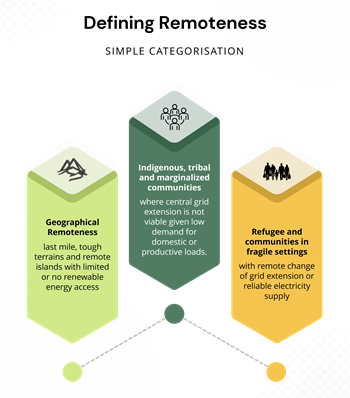 The Global Initiative on Transitioning Remote Communities to Renewable Energy offers a multi-stakeholder platform coordinated by the International Renewable Energy Agency (IRENA) to support communities with limited or no grid access in adopting renewable energy solutions, in developed and developing economies. The initiative addresses the urgent need for inclusive energy access, energy reliability, and decarbonization in line with Sustainable Development Goal 7 (SDG7) and global climate targets. |
Problem Statement and Solution
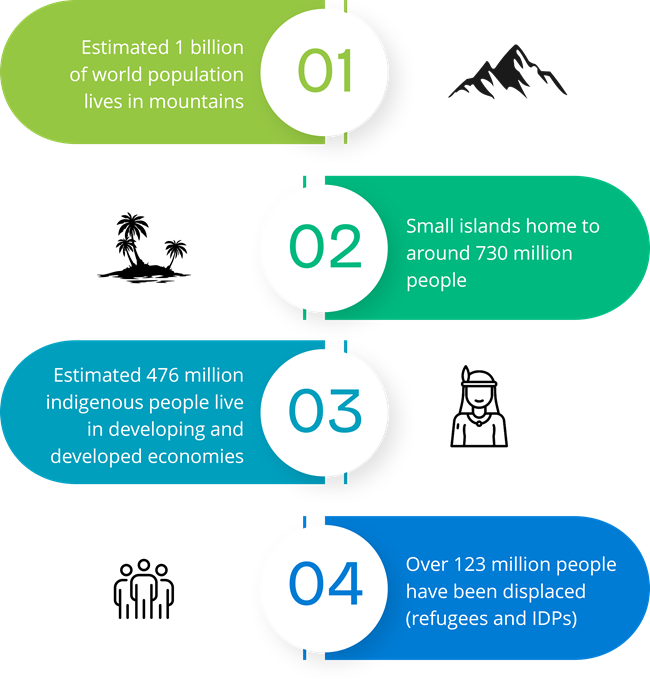
Globally, around 666 million people still lack electricity and 2.1 billion rely on polluting fuels for cooking, and expanding access to these underserved communities is crucial. Seeing with different lenses, this includes around 1 billion indigenous peoples, and over 123.2 million forcibly displaced persons. However, efforts must go beyond just providing electricity – reliability is equally important for communities that already have power but face frequent disruptions.
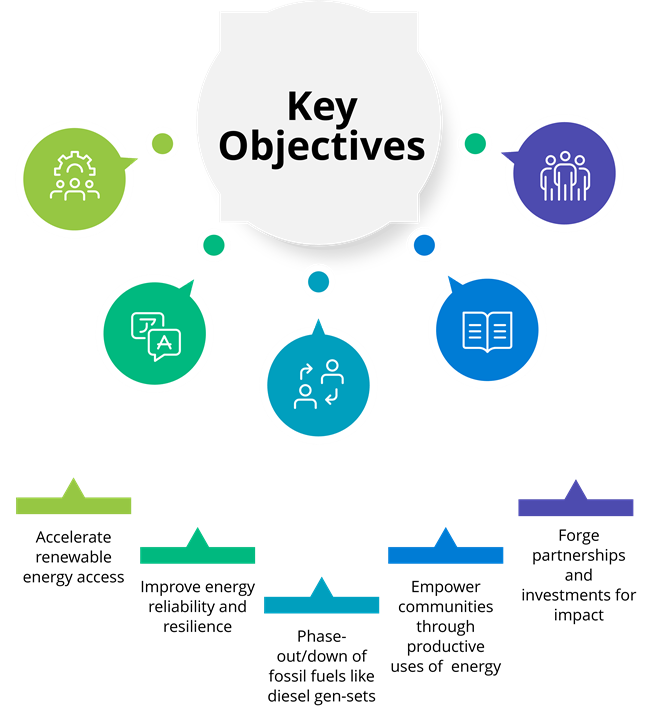
A recent study revealed that approximately 1.18 billion people worldwide live in "energy poverty" due to unreliable access or high costs. Many remote communities depend on polluting, costly fuels like diesel to meet their electricity needs, and require decarbonization. It is essential to address the issues of these vulnerable populations by crafting context-sensitive solutions that consider the unique needs and conditions of each community. Decentralized renewable energy (DRE) solutions, such as mini-grids, standalone solar systems, and hybrid renewable systems, offer a scalable, sustainable alternative to fossil fuel-based systems like diesel gen-sets, ensuring affordable, reliable, and clean electricity access while supporting productive use and climate resilience.
Objectives of the Initiative
Structure and Roles
Guidebook
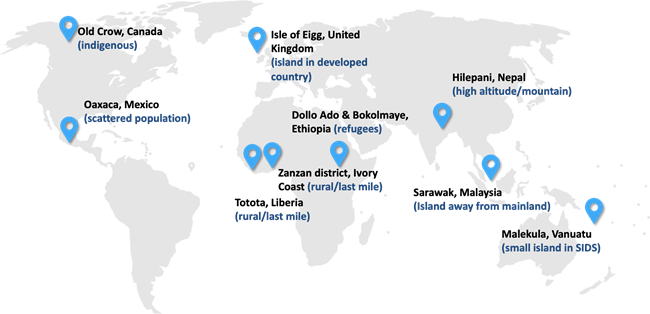
To inform stakeholders, IRENA published a guidebook showcasing successful approaches to transitioning remote communities to renewable energy. The guidebook features nine (9) case studies from diverse geographies, covering remote communities in both developed and developing economies. It serves as a reference for policymakers, development partners, funders, private sector actors, and community members, offering insights and practical guidance for advancing renewable energy solutions in remote settings.
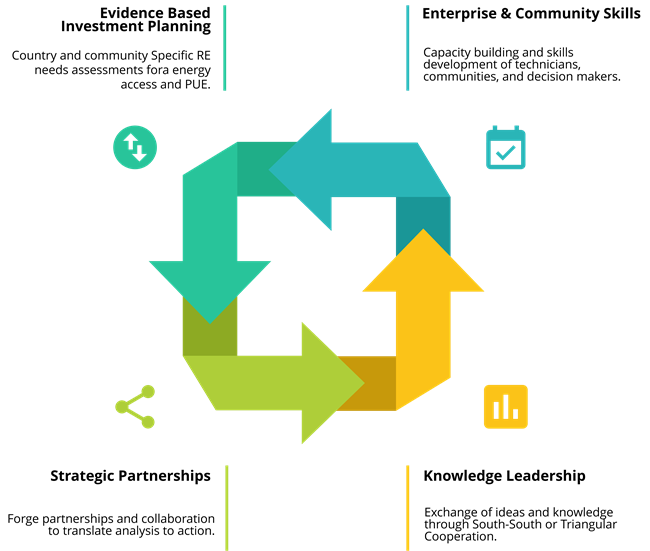
The ongoing support through the initiative is offered through the country and community focused workstreams, which are mostly implemented through collaboration and partnerships.
Existing Partnerships
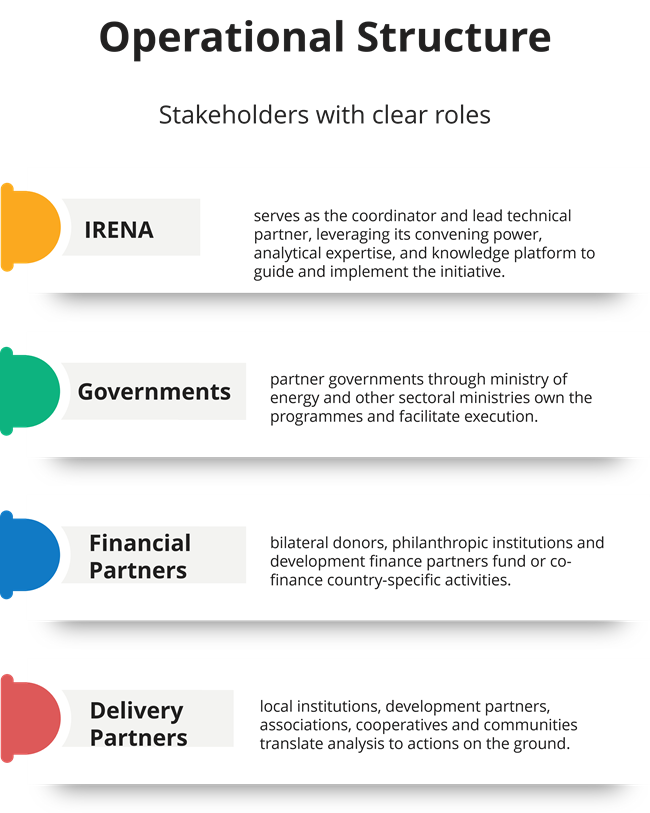
- Financial Partners: The Government of Canada represented by the Natural Resources Canada (NRCan), the Global Energy Alliance (GEA), the Islamic Development Bank (IsDB), The Government of the United Kingdom through Transforming Energy Access Platform.
- Technical Partners: Global Energy Alliance (GEA), Commission for Environmental Cooperation (CEC), SELCO Foundation, Alliance for Rural Electrification (ARE), African Association for Rural Electrification (CLUB ER), South South North, Latin American and Caribbean Energy Organization (OLACDE)
- Local Partners: United Nations Development Programme – Renewable Energy for Rural Livelihoods (UNDP-RERL) Nepal, Society of Renewable Energy (SRE) Indonesia, Energy Action Partners (ENACT), PT Entec Indonesia
Impact and Vision
The initiative aims to drive inclusive energy transitions that deliver economic opportunity, environmental protection, and long-term energy security to remote communities. By promoting reliability, supporting the phase-out of diesel and fossil-based systems, strengthening local technical capacity, and enabling productively used, climate-resilient renewable energy systems, the initiative contributes to a more just, sustainable, and decarbonized global energy future.
